Immersive Design Solutions Home

Category

Design Strategy

18 articles

Designing for Every Body: Closing the Accessibility Gap in Immersive Experiences

Designing for Every Body: Closing the Accessibility Gap in Immersive Experiences

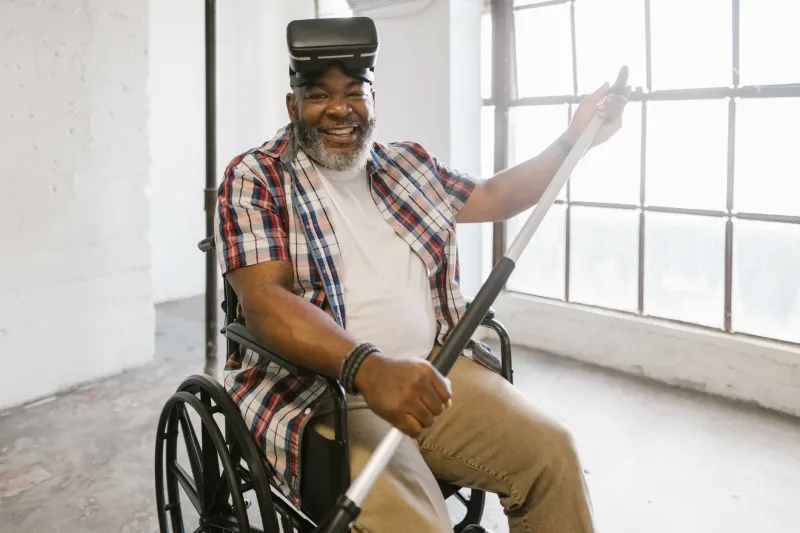
Immersive technology promises presence for everyone, yet most VR and AR experiences remain unusable for millions of Americans with disabilities. This article examines why accessibility is treated as an afterthought and offers a practical framework for building inclusive immersive design from the ground up.

The Broken Kiosk in Broken Arrow: Lessons from a Small-Town Robot That Ended Up in Court

The Broken Kiosk in Broken Arrow: Lessons from a Small-Town Robot That Ended Up in Court

A $60,000 interactive retail installation in an Oklahoma shopping center became a cautionary tale — and eventually a lawsuit — not because the technology failed, but because the design assumptions did. This piece examines what happens when immersive experiences built for coastal audiences land in Middle America, and offers a practical playbook for closing the gap.

When the Room Breathes: The Case for Restraint in Immersive Design

When the Room Breathes: The Case for Restraint in Immersive Design

In the rush to fill every cubic foot of virtual space with motion, sound, and interaction, designers are discovering that the most memorable immersive experiences are often defined by what they leave out. This editorial argues that deliberate restraint — pauses, negative space, and quiet — is becoming the defining skill of spatial design.

Too Real to Trust: The Psychology Behind High-Fidelity 3D Visuals That Quietly Kill Conversions

Too Real to Trust: The Psychology Behind High-Fidelity 3D Visuals That Quietly Kill Conversions

Photorealistic 3D product rendering was supposed to be the gold standard of immersive e-commerce — a frictionless bridge between digital browsing and physical ownership. Yet a growing body of research and real-world data suggests that hyper-fidelity can paradoxically erode consumer trust, triggering skepticism rather than confidence. Understanding why requires a closer look at how the human brain evaluates authenticity under conditions of near-perfect simulation.

Designed for the Lab, Broken in the Wild: How Context Blindness Is Undermining Immersive Experiences

Designed for the Lab, Broken in the Wild: How Context Blindness Is Undermining Immersive Experiences

Technically flawless immersive experiences routinely collapse the moment they leave controlled environments and meet real consumers in unpredictable, messy settings. The culprit is rarely the technology itself—it is a fundamental failure to account for the contexts in which people actually live, move, and make decisions. This piece examines the frameworks and case studies that separate immersive experiences that endure from those that impress only in the demo room.

Beautiful but Unaccountable: Building the Business Case for Immersive Experiences That Actually Holds Up in the Boardroom

Beautiful but Unaccountable: Building the Business Case for Immersive Experiences That Actually Holds Up in the Boardroom

The immersive design industry has a measurement problem, and it is costing agencies and in-house teams real budget. Stunning spatial experiences routinely fail to survive contact with C-suite scrutiny—not because they lack value, but because the frameworks used to evaluate them were built for a fundamentally different medium. This article offers a practical approach to constructing KPIs and ROI narratives that speak the language of financial stakeholders without compromising the integrity of the

What You Hear Is What You Feel: Spatial Audio and the New Language of Immersive Brand Narrative

What You Hear Is What You Feel: Spatial Audio and the New Language of Immersive Brand Narrative

In the competitive landscape of immersive brand experiences, the visual dimension has long commanded the majority of creative investment—yet research consistently shows that sound shapes emotional response, memory formation, and perceived spatial reality with equal or greater force. Spatial audio is emerging as the craft discipline that separates genuinely believable immersive environments from technically impressive but emotionally inert ones. For agencies designing VR and AR campaigns, masteri

Almost Human: The Neuroscience of Avatar Discomfort and What It Means for Brand Identity

Almost Human: The Neuroscience of Avatar Discomfort and What It Means for Brand Identity

AI-generated avatars are proliferating across digital touchpoints, yet users consistently report a creeping sense of unease when interacting with them. Understanding the neurological roots of that discomfort—and the design strategies capable of addressing it—has become a critical competency for any brand investing in avatar-forward experiences.

Feeling the Digital: How Haptic Feedback Is Closing the Sensory Gap in Immersive Design

Feeling the Digital: How Haptic Feedback Is Closing the Sensory Gap in Immersive Design

For decades, digital interfaces have spoken to our eyes and ears while leaving our hands completely uninformed. Haptic technology is now challenging that limitation, introducing tactile feedback as a legitimate design dimension. This piece examines how touch sensation is being woven into immersive experiences across industries—and what stands between today's prototypes and tomorrow's mainstream adoption.

Depth Over Distraction: Why Spatial Design Is Winning the Battle for Consumer Attention

Depth Over Distraction: Why Spatial Design Is Winning the Battle for Consumer Attention

As consumer attention fractures across an ever-expanding landscape of digital touchpoints, forward-thinking brands are discovering that flat, two-dimensional interfaces are no longer sufficient to command genuine engagement. Spatial design — the art of building three-dimensional, context-aware digital environments — is emerging as the strategic response to the modern attention crisis. This piece examines the science, the business case, and the decision framework behind making the leap into immer

The Anatomy of Excellence: 7 Design Principles That Define Truly Immersive Digital Experiences

The Anatomy of Excellence: 7 Design Principles That Define Truly Immersive Digital Experiences

The gap between an immersive experience that captivates and one that merely confuses often comes down to a handful of foundational design decisions. Drawing on contemporary examples from leading brands, this guide outlines the seven principles that distinguish transformative AR and VR applications from expensive novelties. Each principle offers actionable direction for organizations ready to elevate their immersive strategy.